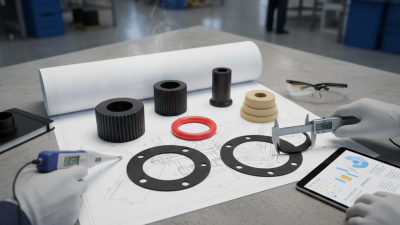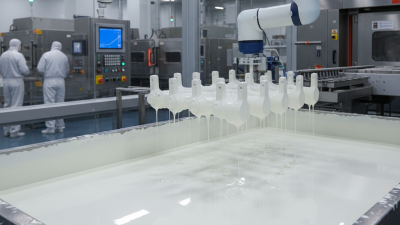
Finding the 2026 best silicone dip molding suppliers worldwide requires more than comparing glossy websites or low quoted prices. This process can produce flexible, protective silicone layers around metal, plastic, or specialized components. Supplier capability depends on material control, dipping consistency, curing accuracy, and application knowledge.
A reliable evaluation should examine silicone grades, coating thickness, surface adhesion, temperature resistance, and production repeatability. Ask whether the supplier supports platinum-cured or peroxide-cured silicone when the application demands it. Review sample parts closely. Look for thin edges, trapped bubbles, uneven coverage, or weak bonding around corners. These small details often reveal more than a sales presentation. Factory audits, process records, inspection reports, and relevant ISO certifications can strengthen confidence. However, certification alone does not prove excellent workmanship.
This guide compares suppliers through practical evidence, including engineering support, prototyping speed, quality controls, capacity, communication, and shipping reliability. It also considers experience in medical, automotive, electronics, food-contact, and industrial applications. Requirements differ widely. A supplier that excels at protective handles may not suit precision medical components. No global ranking stays perfect for long. Prices, facilities, certifications, and lead times can change during 2026. That limitation matters. Buyers should verify current information directly, request recent samples, and confirm production conditions before placing an order. The strongest choice is not always the largest company. It is the supplier that consistently matches the material, geometry, tolerance, compliance, and service needs of the project. Look beyond promises. Test the evidence.
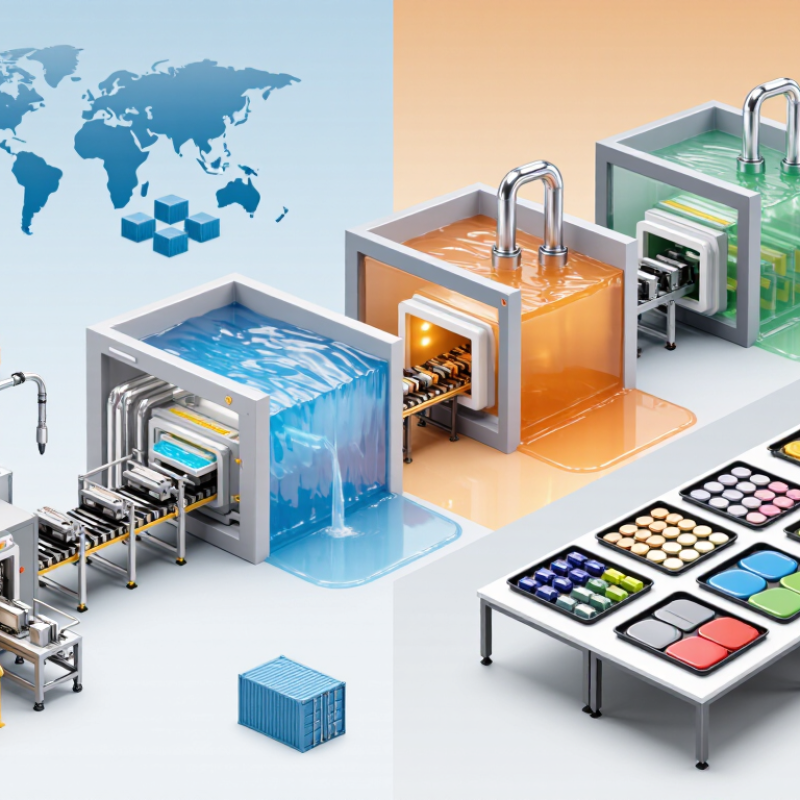
Silicone dip molding forms a flexible coating by repeatedly dipping a heated mold into liquid silicone. Each dip adds a controlled layer. Heat then cures the material into a seamless skin. It looks simple. In practice, temperature, withdrawal speed, viscosity, and cure time control wall thickness. Small changes can create thin edges, trapped air, or uneven surfaces.
The process suits soft grips, protective caps, medical tubing, seals, laboratory components, and cushioning parts. It also supports complex shapes with fewer visible seams than many conventional methods. Grand View Research reported that the global silicone market exceeded US$18 billion in 2023. Its analysis also projects continued growth through 2030, supported by healthcare, electronics, and transportation demand. That growth does not make every application suitable for dip molding.
A capable supplier should show thickness measurements, cure records, batch traceability, and material test results. Medical projects may require biocompatibility evidence aligned with ISO 10993. Electrical parts need insulation and aging data. Supplier comparisons should examine tooling repeatability, sample approval, defect rates, and production capacity. The MarketsandMarkets analysis of silicone elastomers identifies healthcare and industrial performance as important demand drivers. Still, reports describe markets, not your exact part. A trial run remains essential. The method is not perfect. Long thin sections may distort, and tight tolerances can increase inspection costs.
| Category | Data Dimension | Typical Industry Data or Range | Where It Is Used | What Buyers Should Verify |
|---|---|---|---|---|
| Process Definition | Silicone dip molding | A reusable or sacrificial former is repeatedly dipped into liquid or dispersible silicone, followed by gelation, curing, drying, and demolding when required. | Thin-wall covers, protective sleeves, soft-touch components, flexible medical parts, and molded laboratory articles. | Confirm whether the supplier performs true dip molding, silicone coating, latex dipping, or conventional injection and compression molding. |
| Material | Liquid silicone rubber | Two-part addition-cure silicone commonly processed by metering and mixing; typical curing temperatures are approximately 150–200 °C, depending on the formulation and part design. | Medical, electrical, sealing, consumer, and food-contact components where consistent elastic performance is required. | Request the technical data sheet, mixing ratio, cure system, post-cure requirements, and applicable compliance documents. |
| Material | High-consistency silicone rubber | Solid silicone compound generally processed at elevated temperature, often within approximately 160–200 °C; suitable for durable molded or coated parts. | Industrial protection, gaskets, cable accessories, wear-resistant sleeves, and high-temperature components. | Check compound hardness, tear strength, tensile strength, compression set, and resistance to oils, fuels, and chemicals. |
| Material | Room-temperature-vulcanizing silicone | One-part or two-part silicone systems that cure at room temperature or with moderate heat; cure speed depends on chemistry, humidity, temperature, and section thickness. | Prototypes, low-volume parts, repair products, encapsulation, sealing, and specialized flexible forms. | Verify cure inhibition risks, working time, odor, by-products, adhesion, and final-use temperature range. |
| Hardness | Shore A hardness | Common silicone product specifications range approximately from 10 Shore A to 80 Shore A, although the available range depends on the formulation. | Soft tactile covers at lower hardness; structural seals, rollers, and protective parts at higher hardness. | Require hardness testing method, test temperature, sample thickness, and tolerance rather than accepting a nominal value alone. |
| Dimensional Control | Wall thickness and coating build | Dip thickness is controlled by viscosity, withdrawal speed, dwell time, surface tension, material temperature, and the number of dipping cycles. Thin-wall results are application-specific rather than universal. | Protective coatings, flexible skins, sleeves, membranes, and small hollow parts. | Ask for cross-section measurements, minimum and maximum wall thickness, coating uniformity data, and inspection sampling plans. |
| Surface Quality | Appearance and finish | Typical acceptance criteria include uniform color, absence of pinholes, tears, bubbles, wrinkles, flash, contamination, and exposed substrate. | Visible consumer products, medical components, laboratory items, and soft-touch handles. | Approve a limit sample or visual standard and define lighting, inspection distance, magnification, and defect limits. |
| Production Scale | Suitable production volume | Dip molding can support prototypes, pilot runs, low-to-medium volumes, and selected mass-production programs when fixtures and cycle controls are optimized. | Custom development, replacement parts, medical programs, industrial batches, and recurring production. | Compare tooling investment, fixture capacity, cycle time, labor content, automation level, and monthly capacity. |
| Tooling | Formers, mandrels, and fixtures | Formers may be made from metal, glass, ceramic, polymer, or other chemically compatible materials; surface condition strongly affects release and finish. | Hollow articles, sleeves, caps, covers, tubes, and parts requiring repeatable geometry. | Confirm former life, release-agent compatibility, dimensional stability, cleaning method, and replacement cost. |
| Curing | Drying and vulcanization control | Process control may include staged drying, oven curing, humidity control, temperature recording, and post-curing to reduce residual volatiles. | Products requiring stable dimensions, low odor, improved cleanliness, or controlled extractables. | Request cure profiles, batch records, oven calibration evidence, post-cure conditions, and residual testing where applicable. |
| Medical Devices | Quality and regulatory capability | Relevant supplier systems may include ISO 13485 for medical-device quality management, risk management, traceability, cleanroom controls, and validation documentation. | Flexible medical covers, seals, protective components, laboratory accessories, and selected patient-contact parts. | Verify intended-use classification, biocompatibility evidence, sterilization compatibility, lot traceability, and change-control procedures. |
| Food Contact | Food-contact documentation | Depending on the destination market, documentation may reference applicable food-contact regulations, migration testing, extractables, and supplier declarations. | Food-processing accessories, flexible seals, kitchen components, and reusable handling products. | Check the exact formulation, regulatory jurisdiction, temperature limits, cleaning chemicals, and migration-test conditions. |
| Electrical | Insulation and environmental resistance | Silicone generally provides good temperature flexibility, moisture resistance, and electrical insulation, but performance is formulation- and design-dependent. | Cable protection, connectors, grommets, insulating covers, and electronic assemblies. | Request dielectric strength, volume resistivity, tracking performance where relevant, flammability data, and aging results. |
| Chemical Performance | Resistance profile | Silicone usually performs well across a broad temperature range and resists ozone and weathering, while compatibility with concentrated solvents, fuels, and some oils must be tested. | Outdoor equipment, industrial seals, laboratory products, automotive-adjacent parts, and protective covers. | Require immersion, swelling, hardness-change, tensile-retention, and compression-set data using the actual service media. |
| Regional Supply | North America and Europe | Common strengths include regulated-industry documentation, engineering support, validation, traceability, and established quality systems. | Medical, aerospace-related, laboratory, food-contact, and industrial applications. | Evaluate lead time, local technical support, regulatory documentation, minimum order quantity, and total landed cost. |
| Regional Supply | East and Southeast Asia | Common strengths include tooling development, scalable production, broad manufacturing capacity, and competitive unit economics. | Consumer products, electronics, industrial components, automotive supply chains, and high-volume programs. | Audit process controls, subcontractor management, material traceability, inspection capability, and logistics continuity. |
| Regional Supply | South Asia and other emerging manufacturing regions | Potential advantages include flexible labor capacity, custom production, and competitive development support; capabilities vary substantially by facility. | Custom industrial parts, low-to-medium volume products, prototypes, and cost-sensitive applications. | Use a capability audit, pilot order, first-article inspection, and documented corrective-action process before full production. |
| Quality System | Supplier certifications and controls | Frequently requested systems include ISO 9001; regulated applications may require ISO 13485, documented process validation, calibration, nonconformance control, and full batch traceability. | All industries, with stricter controls for medical, food-contact, electrical, and safety-critical products. | Verify certificate scope, issuing body, expiry date, manufacturing-site coverage, and whether the certificate applies to the actual process. |
| Sustainability | Waste and energy management | Important indicators include material-yield monitoring, controlled scrap handling, energy-efficient ovens, reusable fixtures, and documented environmental management. | Long-term supply programs and customers with environmental reporting requirements. | Ask for waste-reduction data, environmental certifications where relevant, packaging policy, and material-disposal procedures. |
| Best-Fit Supplier | Selection criteria for 2026 projects | The strongest candidate is the supplier that can demonstrate repeatable thickness control, qualified silicone materials, validated curing, documented inspection, transparent capacity, and application-specific compliance. | Projects requiring stable quality, predictable delivery, and controlled total cost rather than price alone. | Score technical capability, quality evidence, sample performance, capacity, lead time, communication, compliance, and total landed cost. |