Choosing among the 2026 best dip molding manufacturers can be difficult for global buyers. Supplier websites often show clean parts, modern facilities, and confident claims. Real performance requires closer inspection.
This guide examines manufacturers through practical evidence. It considers material expertise, mold design, wall thickness control, surface finish, and production consistency. It also reviews sampling procedures, inspection records, traceability, and communication across time zones. A capable supplier should explain how vinyl, latex, silicone, or nitrile compounds match the application. They should also clarify curing conditions, dimensional tolerances, packaging methods, and expected lead times. Small details matter. A rough edge can affect assembly. Uneven thickness can reduce product life.
Reliable manufacturers usually provide technical drawings, test reports, and documented quality systems. Certifications may support credibility, but certificates alone prove little. Buyers should request recent samples and compare them against approved specifications. Factory audits, pilot runs, and clear corrective-action processes can reveal more than promotional language. Compliance with applicable product, environmental, and workplace requirements also deserves careful review.
No supplier is perfect. Some published data may be incomplete, outdated, or difficult to compare. That limitation should remain visible. Pricing can change with compound costs, tooling complexity, order volume, and freight conditions. Therefore, this overview is a practical starting point, not a permanent ranking. It aims to help purchasing teams ask sharper questions, reduce avoidable risk, and identify dip molding partners that can support stable quality in international production.

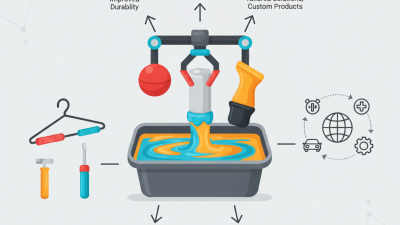
Dip molding forms a flexible polymer part over a shaped former. The former enters a liquid compound, rises, and receives a controlled coating. Heat then gels or cures the layer. Repeated dipping can build the required wall thickness.
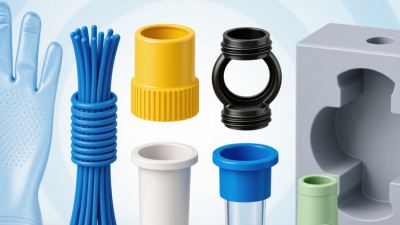
This process suits gloves, protective covers, medical components, and irregular hollow parts. Tooling is often simpler than injection molding, especially for lower-volume production. However, quality depends on compound viscosity, bath temperature, withdrawal speed, and curing time. Small changes can create thin spots or pinholes. They may not be visible immediately.
Grand View Research reported that the global medical gloves market reached approximately USD 15.3 billion in 2023. Its growth outlook reflects continuing demand for consistent, disposable polymer products. Dip molding supports this demand, but buyers should avoid treating market growth as proof of supplier capability. Published reports rarely separate dip-molded products from other manufacturing methods. That is a limitation worth noting.
Global buyers should request test data for tensile strength, elongation, leakage, wall thickness, extractables, and aging performance. ISO 13485-based quality systems can support traceability, but certification alone cannot guarantee stable production. Ask for batch records and process-control evidence. Check samples under real handling conditions. A part that looks smooth may still fail after storage, stretching, or repeated contact. Supplier experience matters most when design changes, climate differences, and shipping conditions enter the equation.
What Dip Molding Is and Why It Matters to Global Buyers
| Capability or Buyer Criterion | Typical Industry Information | Why It Matters to Global Buyers | Recommended Supplier Evidence |
|---|---|---|---|
| Process definition | Dip molding forms a hollow or coated part by immersing a heated or treated mold into a liquid or plastisol compound, followed by gelation, curing, or drying. | A clear process definition helps buyers distinguish dip molding from injection molding, rotational molding, and dip coating. | Process flow chart, sample parts, and written confirmation of the selected molding method. |
| Common material systems | PVC plastisol, natural latex, nitrile latex, polyurethane, silicone, and selected synthetic elastomer dispersions. | Material selection affects flexibility, chemical resistance, temperature performance, skin contact suitability, and regulatory requirements. | Technical data sheets, certificates of analysis, restricted-substance declarations, and material traceability records. |
| Typical wall thickness | Approximately 0.5–3.0 mm is common for many plastisol and elastomer dip-molded products; thinner or thicker sections require process-specific validation. | Wall thickness influences tear strength, flexibility, weight, cycle time, and product consistency. | Cross-sectional measurements from pilot samples and a documented thickness-control method. |
| Mold and former materials | Aluminum, steel, ceramic, glass, and selected silicone or composite formers may be used, depending on geometry and curing temperature. | Former material affects surface finish, heat transfer, release behavior, tooling life, and dimensional stability. | Tooling drawings, surface-finish specifications, maintenance plans, and mold-life estimates based on actual use. |
| Part geometry | Dip molding is well suited to seamless hollow parts, open-ended covers, gloves, protective sleeves, flexible containers, and irregular shapes with moderate detail. | The process can reduce tooling complexity for hollow flexible products, but deep undercuts and highly precise features may require design changes. | Design-for-manufacturing review, 3D drawings, draft and release analysis, and prototype approval records. |
| Dimensional control | Tolerances commonly depend on material shrinkage, mold temperature, viscosity, dwell time, withdrawal speed, and post-curing; broad tolerances are generally more practical than precision injection-molded tolerances. | Realistic tolerances reduce rejection risk and prevent drawings from specifying requirements the process cannot reliably hold. | Capability studies, inspection reports, calibrated gauges, and an agreed control plan for critical dimensions. |
| Surface finish and appearance | Surface appearance is transferred largely from the former and can range from smooth to textured; color uniformity depends on compound mixing and process control. | Appearance consistency is important for consumer, medical, automotive, and industrial products shipped across multiple markets. | Approved color standards, surface samples, lighting conditions for inspection, and defect classification criteria. |
| Production-volume suitability | Dip molding can be economically attractive for prototypes, low-to-medium volumes, multiple sizes, and products where flexible tooling is preferred. | Buyers can compare tooling investment and unit cost against injection molding or other processes before committing to production. | Costed quotations at several annual-volume levels, tooling amortization assumptions, and capacity information. |
| Quality management | A robust system typically includes incoming-material checks, viscosity or solids control, bath monitoring, cure verification, visual inspection, dimensional checks, and lot traceability. | Process variation can create thin areas, pinholes, bubbles, color differences, or incomplete curing; documented controls lower supply risk. | Quality certificates, inspection plans, nonconformance procedures, corrective-action records, and retained samples. |
| Regulatory readiness | Requirements vary by application and destination, including chemical restrictions, food-contact rules, medical-device controls, worker safety, and product labeling obligations. | Compliance documentation is essential when products cross borders or enter regulated markets. | Application-specific test reports, declarations of conformity, safety data, and records identifying all relevant additives. |
| Global supply capability | Important operational factors include export packaging, multilingual documentation, batch traceability, logistics coordination, backup capacity, and agreed delivery terms. | These factors affect landed cost, customs clearance, continuity of supply, and the buyer’s ability to manage international inventory. | Incoterm-based quotations, packaging specifications, production-capacity statements, business-continuity plans, and shipment records. |
| Best-fit application areas | Protective covers, flexible grips, handles, bellows, gloves, medical and laboratory components, industrial sleeves, seals, and other hollow or coated elastomeric products. | Application fit helps buyers balance flexibility, durability, chemical resistance, ergonomics, and manufacturing cost. | Relevant application samples, performance-test results, reference specifications, and validated production samples. |
Note: The ranges and descriptions above are general industry guidance rather than guarantees. Actual results depend on the compound, mold design, part geometry, curing conditions, inspection method, and intended market.