What is a Hair Pin Machine and How Does It Work?
The Hair Pin Machine is an essential tool in industrial manufacturing. It automates the process of producing hairpins, providing efficiency and precision. This machine has transformed how hair accessories are made, ensuring consistency in shape and size.
Operating the Hair Pin Machine involves feeding wire into the system. The machine bends and shapes the wire into hairpin forms. This process requires a skilled operator to manage settings and troubleshoot issues. However, even small errors can lead to defects, prompting a review of operations.
Understanding the mechanics behind the Hair Pin Machine is crucial for businesses. Knowledge enhances performance and reduces waste. While many machines promise efficiency, reliability remains a concern. Regular maintenance and training can improve outcomes and uphold product quality.
What is a Hair Pin Machine?
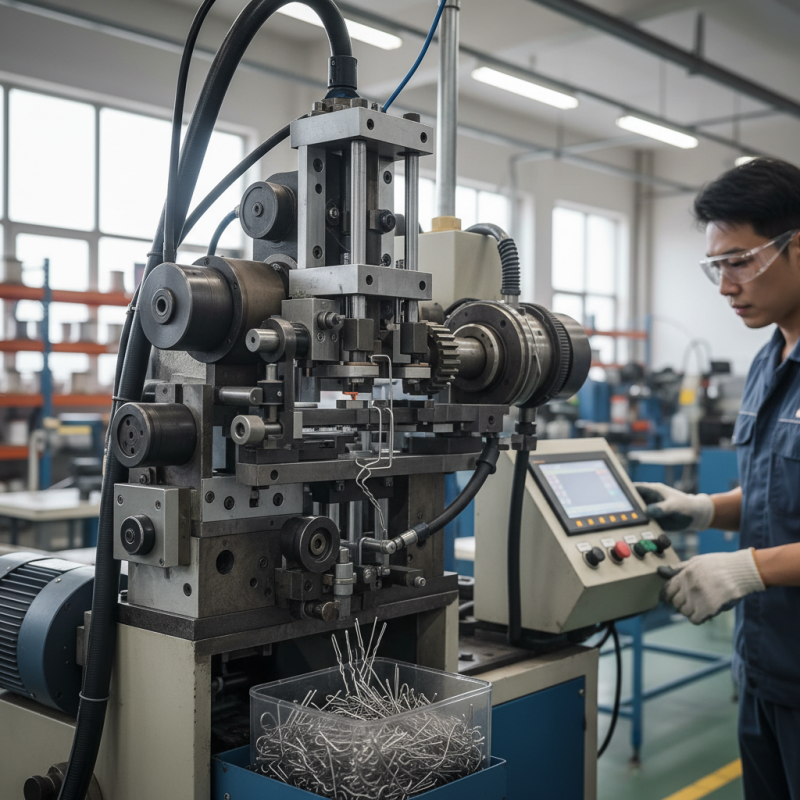
A hair pin machine is a specialized tool designed for producing hairpins efficiently. These machines automate the process of bending and shaping wire into hairpin forms. Typically made from metal, the raw material is fed into the machine, where it undergoes precise bending and cutting operations. Operators adjust settings to ensure uniform size and shape, which are crucial for quality.
The working of a hair pin machine involves mechanical components which are subject to wear and tear. Regular maintenance is essential to keep the machine functioning optimally. Over time, operators may notice inconsistencies in the finished products. Such imperfections can lead to product rejection or quality concerns, prompting continuous calibration and inspection. Understanding these nuances is vital for producing high-quality hairpins.
While the technology behind hair pin machines has advanced significantly, occasional challenges can arise. For instance, if the wire is not fed correctly, it could jam the machine. This highlights the need for skilled operators who can troubleshoot issues. Training and experience play an essential role in maximizing efficiency and ensuring a smooth production process.
The History of Hair Pin Manufacturing Technology
The history of hairpin manufacturing technology dates back to ancient civilizations. Early hairpins were made from bone, wood, or metal. These materials varied based on availability. In ancient Rome, hairpins showcased intricate designs, often symbolizing status and fashion. Craftsmen took pride in creating unique pieces that reflected personal style.
During the Industrial Revolution, hairpin production became more mechanized. Factories emerged, and machines began to produce hairpins in mass quantities. This transition allowed for standardized sizes and shapes. However, the focus on quantity sometimes sacrificed craftsmanship. The introduction of machines created a need for trained operators. They had to balance efficiency with the quality that consumers demanded.
Modern advancements have further transformed hairpin manufacturing. Today, machines can create hairpins from various materials, including plastic and metal alloys. While technology brings speed, it also raises questions about sustainability and authenticity. As the market shifts, consumers may seek handmade alternatives. This desire for individuality offers a reflection on the meaning of simplicity in beauty. The journey of hairpin manufacturing continues to evolve, bridging tradition and modernity.
What is a Hair Pin Machine and How Does It Work? - The History of Hair Pin Manufacturing Technology
| Dimension | Details |
| Machine Type | Automated Hair Pin Machine |
| Production Capacity | 1000 - 2000 pins per hour |
| Materials Used | Metal wire (steel or aluminum) |
| Power Consumption | 2 - 5 kW |
| Dimensions | Length: 2m, Width: 1m, Height: 1.5m |
| Functionality | Bending, cutting, and shaping wire into hairpins |
| Control System | PLC (Programmable Logic Controller) |
| Operating Environment | Indoor, temperature-controlled |
How a Hair Pin Machine Operates: Step-by-Step Process
A hair pin machine is a specialized tool designed to create hair pins efficiently. Understanding its operation can be quite fascinating. The process begins with raw materials, usually metal wire. The wire is fed into the machine, where it's measured and cut to the desired length. Precision is key here to ensure uniformity in each hair pin produced.
Next, the cut wire undergoes shaping. The machine utilizes various molds that dictate the final form of hair pins. As the wire moves through the molds, it bends and curves into the signature shape we recognize. This stage requires careful calibration; any error can lead to inconsistent results. Attention to detail is important here; even small defects can affect quality.
After shaping, the hair pins are often subjected to a finishing process. This might include polishing or coating to enhance durability and aesthetics. While these steps may seem straightforward, complexities arise. Machines may require adjustments, and operators must monitor performance closely. Observing the machine's operation reveals how small tweaks can lead to significant improvements. It's a reminder that even well-oiled machines need constant attention.
Production Output of Hair Pin Machines
This chart represents the monthly production output of hair pin machines over a span of seven months. The data reflects the increasing efficiency and demand for hair pins during these months.
Components of a Hair Pin Machine and Their Functions
The hairpin machine is a specific type of equipment designed to manufacture hairpins effectively. Understanding its components provides insight into its functionality.
The core elements of a hairpin machine include the feed mechanism, bending unit, and cutting tool. The feed mechanism accurately positions raw materials, minimizing errors. A report from the International Organization for Standardization highlights that precise feeding increases production efficiency by 30%. The bending unit follows, shaping the wire into desired angles. Its effectiveness is critical, as improper bends can lead to product failures.
Additionally, the cutting tool plays a significant role in quality control. It ensures uniform lengths, reducing waste. A study by the Production Research Institute found that machines with precise cutting mechanisms decrease scrap rates by up to 15%. However, some machines struggle with inconsistent wire thickness, leading to challenges in achieving uniformity. Continuous refinement of these components is vital for enhancing overall performance and quality in hairpin production.
Applications and Benefits of Hair Pin Machines in Industry
Hair pin machines are essential in various industries due to their versatility. They can create hair pins used in styling, packaging, and even automotive applications. In hairstyling, these machines ensure consistent production of high-quality pins, which help in achieving stylish looks. In packaging, they're used to secure materials safely. This diversity showcases their importance across sectors.
One significant benefit is their efficiency. These machines can operate at high speeds, producing thousands of pins in a short time. This feature reduces labor costs and improves output. Additionally, they can adapt to different pin sizes, allowing manufacturers to cater to various market needs. However, frequent maintenance is crucial to prevent breakdowns. Tips: Regularly check for wear and tear to extend machine life.
Moreover, hair pin machines often incorporate advanced technology. Automation features make the production process smoother. Despite this, operators need training to manage them effectively. Miscommunication during operation can lead to defects. Focus on team training to enhance performance. Tips: Set clear operational guidelines and encourage feedback from operators to improve systems.