Choosing a custom molding manufacturer is more than comparing unit prices. For global buyers, the right partner must turn a design into consistent parts, communicate clearly, and support production across borders. This guide to 2026’s best custom molding manufacturers gives buyers a practical starting point—not a universal ranking.
A useful comparison looks at process capabilities, material options, tooling expertise, quality controls, and production capacity. Ask how a supplier handles design reviews, sample approval, and changes after a mold is built. Request measurable evidence, such as inspection reports, material documentation, and examples of similar projects. A polished brochure is not proof.
Details matter. A small variation in wall thickness can affect strength, cooling time, and reject rates. Buyers should also clarify tooling ownership, maintenance terms, lead times, shipping responsibilities, and who responds when production slips. These questions can reveal gaps before a purchase order is placed. They take time.
The strongest shortlist depends on the part, the target market, and the buyer’s risk tolerance. A supplier suited to high-volume, tight-tolerance components may not fit a short run or frequent design changes. No article can replace a technical review, factory assessment, or carefully evaluated sample. That limitation is worth remembering. Use the profiles ahead to compare manufacturers on evidence and fit, then verify current capabilities directly before committing.
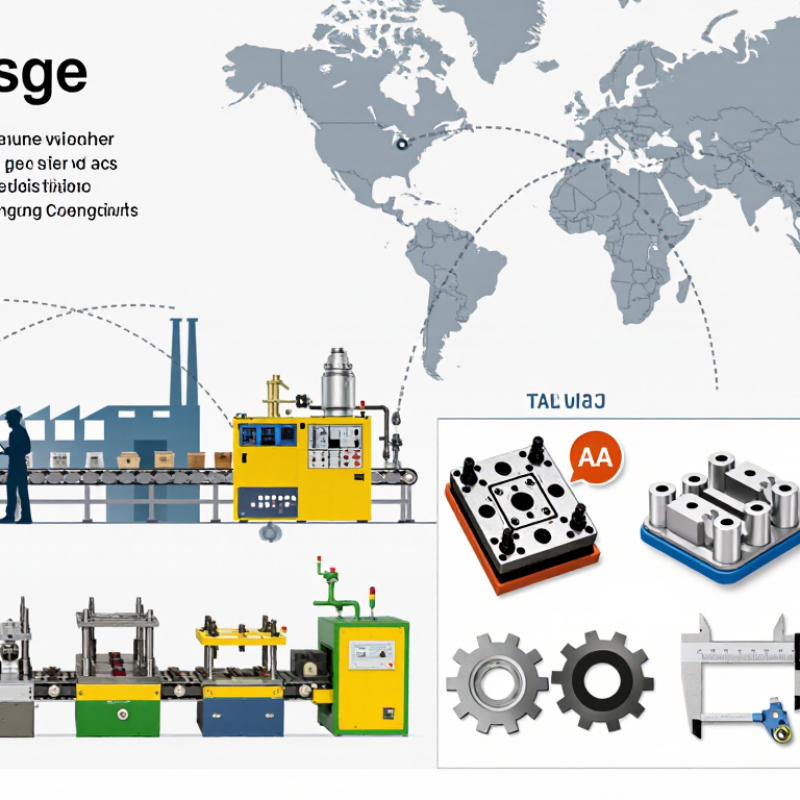
Custom molding manufacturers turn product designs into repeatable physical parts. They review drawings, recommend a molding process, build tooling, and produce samples before larger production runs. Depending on the part’s shape and material, production may use injection, compression, or another molding method. Small details matter. A change in wall thickness can affect how material fills the mold, cools, and holds its shape. Results also depend on the resin, tool design, and machine settings.
Global buyers need more than a supplier that can make a part. They need clear communication about material grades, tolerances, surface finish, inspection methods, packaging, and delivery schedules. A sample should be checked against the drawing, with key dimensions measured and any defects recorded. And not every issue appears on a screen. Gate marks, slight warping, or an unclear finish requirement may only become obvious after sampling. That can mean another tool adjustment and a longer schedule. Sharing updated drawings and confirming measurement methods early helps reduce avoidable rework across time zones and production stages.
For global buyers, a molding supplier should prove process control, not just show attractive sample parts. Ask for recent inspection records, material certificates, and a clear explanation of how defects are tracked. During a factory review, look at mold storage, machine maintenance logs, and how operators check dimensions between production runs. Small details matter. A clean sample does not guarantee a stable production process.
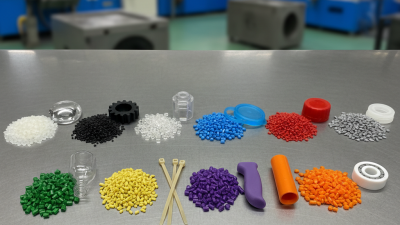
Match equipment and experience to the part. A supplier making thin-wall housings may not be the best choice for large structural components. Discuss resin selection, shrinkage allowances, tooling life, and expected production volume before approving a quote. Request a trial run and inspect parts against agreed drawings. If tolerances are critical, confirm the measurement method and gauge calibration. Paperwork alone is not enough.
Also assess communication, delivery planning, and the full cost of ownership. Ask who owns the mold, how repairs are approved, and where spare components are kept. Clarify packaging, shipping assumptions, and how schedule changes are reported. A low unit price can still become expensive if tooling delays production or defects arrive late. No supplier is perfect; a candid answer about a past process problem may be more useful than a flawless sales presentation. Compare evidence consistently, and record unresolved risks before making a commitment.
East Asia remains a major custom molding region, supported by concentrated tooling, resin, and component suppliers. Manufacturers in China, Taiwan, South Korea, and Japan often serve electronics, automotive, and consumer-product programs. Nearby toolmakers can shorten design changes, while established production networks support high-volume injection molding. Ask how sample approval, mold trials, and production inspection are handled. Fast capacity is useful, but it does not replace clear quality records.
Germany and other Central European markets are known for precision engineering and close coordination between mold designers and product teams. These capabilities can suit complex parts, demanding tolerances, and shorter production runs. North American manufacturers may offer practical access to local engineering support and customers in medical, industrial, and transport sectors. Mexico can also provide proximity to North American assembly operations. A nearby factory is not automatically easier.
The map can mislead. Regional strengths vary by supplier, not just country. Before selecting a partner, compare resin experience, tool maintenance plans, dimensional inspection methods, and communication across time zones. Request evidence from a relevant part family, such as measurement reports or documented trial results. Also check who controls mold files and how replacement components are made. Shipping costs matter, but late design changes can matter more. Teams sometimes overlook that detail.
Top Custom Molding Manufacturing Regions and Their Industry Strengths
The largest plastics production base, supported by strong electronics, consumer products, automotive, and high-volume injection molding ecosystems.
Strong in medical devices, automotive components, aerospace parts, engineering polymers, automation, and regulated production.
Known for automotive, industrial equipment, sustainable materials, precision tooling, and compliance-focused molding programs.
Supported by petrochemical feedstocks, packaging, construction products, infrastructure components, and regional supply-chain development.
Competitive in packaging, automotive supply, household products, agricultural plastics, and serving regional markets.
Developing capabilities in packaging, construction materials, consumer goods, and industrial polymer processing.
The chart uses 2023 estimated regional shares of global plastics production as a practical proxy for the depth of each region’s molding supply base. Regional shares are rounded and aligned with international plastics industry reporting.
Comparing custom molding manufacturers starts with the material, not the quotation. Resin selection affects strength, shrinkage, temperature resistance, and recycling options. Ask for resin certificates, lot traceability, and test results under expected service conditions. Grand View Research valued the global injection molding market at approximately USD 262 billion in 2022, showing how broad this supplier landscape has become. Large market size does not guarantee reliable production.
Process capability deserves equal attention. Injection molding suits high-volume, repeatable parts, while compression molding may better support thermoset components. Rotational molding can produce large hollow parts with lower tooling complexity. Review machine clamp force, shot capacity, mold-change procedures, and automation levels. Request capability studies with Cpk results, not only attractive sample parts. ISO’s 2023 Survey reported more than one million ISO 9001 certificates worldwide, yet certification alone cannot prove stable dimensions.
Quality evidence should reach the production floor. Check first-article inspection, cavity balancing, gauge calibration, and corrective-action records. Ask how operators identify short shots, flash, warpage, and color variation. I once focused too heavily on unit price; tooling maintenance later created unexpected delays. That mistake still matters. A practical audit should include a running machine, measurement reports, and retained samples from separate production lots.
Production capacity also needs honest verification. Compare available machine hours, mold storage, maintenance staffing, packaging controls, and backup equipment. Review lead times against realistic batch sizes. Some factories promise speed but quietly depend on outside processors. That risk is easy to miss. The strongest comparison combines material expertise, process control, documented quality, and visible production discipline.
Compare manufacturing processes and supplier capabilities against the part’s material, geometry, volume, and quality requirements. Process suitability and production economics vary by design and supplier; confirm them with a technical review and quotation.
| Process or evaluation area | Common materials | Typical fit | Advantages to assess | Trade-offs and questions for suppliers |
|---|---|---|---|---|
| Injection molding | Thermoplastics such as PP, ABS, PC, PA, and POM; some suppliers also mold liquid silicone rubber. | Repeatable plastic parts, from small components to larger molded housings, especially when production quantities justify tooling. | Can produce complex shapes and consistent parts at scale; multiple materials and colors may be available. | Tooling requires upfront investment. Ask about mold ownership, expected cycle time, resin sourcing, mold maintenance, and how changes to the part or tool are approved. |
| Compression molding | Commonly thermoset compounds, including bulk molding compound (BMC) and sheet molding compound (SMC); rubber compounds are also used in compression processes. | Parts that benefit from thermoset properties, including electrical components and larger molded panels or covers. | Suitable for materials that cure in the mold; glass-fiber-reinforced compounds can offer stiffness and heat resistance. | Part detail, flash, surface finish, and cycle time depend on the compound, tooling, and process control. Confirm material grade, cure conditions, and trimming method. |
| Transfer molding | Thermoset molding compounds and rubber compounds, depending on the equipment and application. | Parts requiring material to flow into mold cavities, including some components with inserts or intricate features. | Can suit parts where controlled filling around features or inserts is important. | Material waste, flash, and achievable tolerances depend on the design and process. Ask how inserts are located and how fill quality is checked. |
| Blow molding | Thermoplastics such as HDPE, LDPE, PP, and PET, subject to process and product requirements. | Hollow products such as bottles, containers, and ducts. | Designed for hollow parts; container shape, neck details, and wall distribution can be tailored to the application. | Wall-thickness distribution and pinch-off or seam details need review. Confirm leak testing, dimensional checks, and compatibility with the intended contents. |
| Rotational molding | Typically polyethylene grades; other materials may be available depending on the process and supplier. | Large, hollow, often one-piece products such as tanks, bins, and equipment housings. | Can produce hollow parts without the high clamping forces used in injection molding; inserts and molded-in features may be possible. | Cycle times, wall uniformity, and dimensional tolerances differ from other molding methods. Review draft, shrinkage, surface finish, and application-specific testing needs. |
| Material selection | Select a specific grade, not just a polymer family. Relevant options include unfilled, reinforced, impact-modified, flame-retardant, and UV-stabilized grades. | Applications with defined requirements for strength, stiffness, impact, temperature, chemicals, weathering, appearance, or regulatory compliance. | Grade selection aligns the part with its operating environment and performance targets. | Request the exact grade designation, technical data sheet, color specification, and change-control policy. Verify compliance claims for the intended market and end use. |
| Quality management | Applies to all processes and materials. | Suppliers producing parts to controlled drawings, specifications, and acceptance criteria. | Documented inspection, traceability, and corrective-action practices help buyers verify conformance and manage issues. | Ask for relevant quality-system certificates and their current scope; agree on critical dimensions, sampling plans, inspection records, nonconformance handling, and first-article approval. |
| Tooling and engineering | Process-specific molds, dies, and auxiliary tooling. | Projects requiring design-for-manufacturing review, prototypes, production tooling, or tool transfer. | Early review can identify draft, wall-thickness, gate, vent, parting-line, and ejection considerations before production. | Define tool specifications, ownership, storage location, maintenance, expected life, repair responsibility, and release of design files in the contract. |
| Production capacity and continuity | Evaluate the actual machine, mold, material, and shift plan for the quoted part. | Buyers balancing forecast demand, lead time, seasonal peaks, and business-continuity risk. | A capacity plan tied to the part and forecast makes delivery commitments easier to evaluate. | Request machine availability, validated cycle assumptions, bottleneck details, backup plans, and evidence that quoted capacity is not merely total factory capacity. |
| Global delivery and landed cost | Include molded parts, packaging, tooling, freight, duties, and applicable taxes in the comparison. | Cross-border sourcing, multiple delivery locations, or programs sensitive to logistics and customs delays. | A like-for-like landed-cost and delivery comparison supports informed sourcing decisions. | Confirm shipping terms, export packaging, country of origin, documentation, lead-time assumptions, customs responsibilities, and a plan for transit damage or delivery delays. |
Buyer note: No single molding process or supplier is best for every project. Compare quotations using the same approved drawing, material grade, annual demand, quality requirements, tooling scope, packaging specification, and delivery terms.
2026 Best Custom Molding Manufacturers for Global Buyers
Global sourcing for custom molding starts with a clear, measurable specification. Define resin grade, color tolerance, critical dimensions, expected volume, and inspection method before requesting quotes. A drawing alone may leave room for costly assumptions. Small details matter.
Check whether a supplier can document material traceability, process controls, inspection results, and relevant testing for your destination markets. Requirements vary by product and country, so confirm them with qualified compliance professionals. Request sample records, not just assurances. A factory visit or live process review can reveal how defects are contained and changes are approved.
Compare total landed cost, not only the unit price. Include tooling, sampling, packaging, freight, duties, inspection, and the cost of rejected parts. Ask how quotes change when resin prices or order volumes shift. Make sure tooling ownership, maintenance, and transfer terms are written into the agreement. That step is easy to overlook. A supplier with the lowest bid may still be the right choice, but only if quality evidence and delivery performance support it. Build a small pilot order into the plan, then review actual cycle time, scrap, and communication. Forecasts are imperfect, and buyers sometimes underestimate the effort needed to align teams across time zones. Allow room for correction before scaling.